I build productsthat ship.
Senior Full Stack Engineer & Tech Lead · 8+ years building SaaS, APIs and AI products
First, the real problem.
Start with the customer and the constraint that matters.
Selected work
Results first.
Then the projects.
- 400K+
- ExtendedForms users
- 10M+
- online exams delivered
- 3x
- revenue growth
- 5
- engineers led
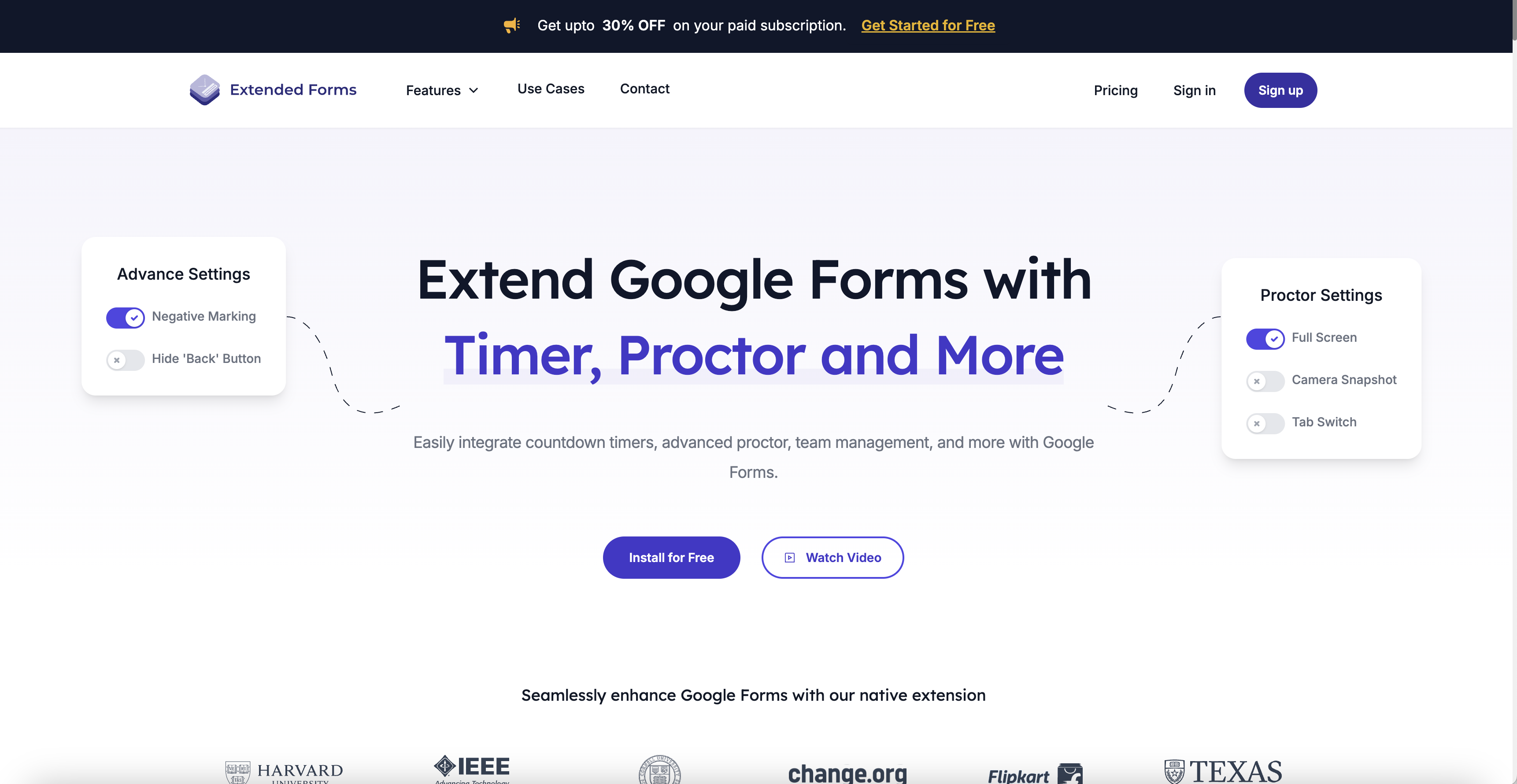
01 / scale & leadership
ExtendedForms
A form. A full assessment.
Technical lead · ExpressTech
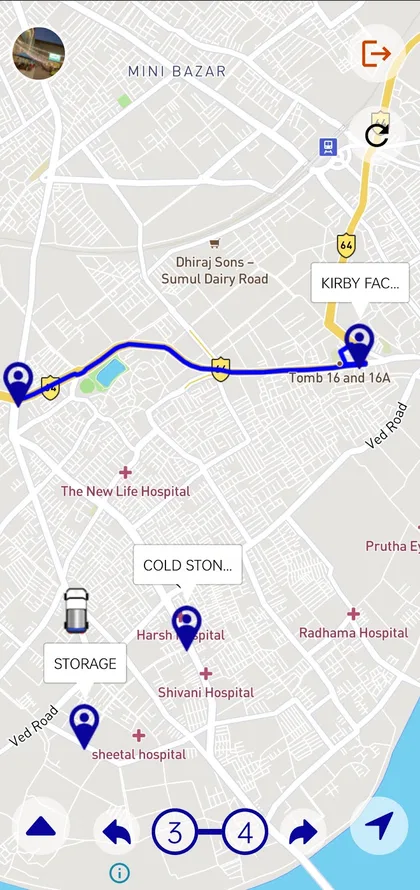
Collahead / 01
Every stop, proven on the map.
Mapbox routes, geofenced stops and a 1-mile radius check before a driver can submit.
Mobile app, mapping and live-tracking engineering
03 / The rest of the work
A few highlights.
A longer story.
Client collaborations, storefronts and weekend experiments. Filed here, when you want to go deeper.
Explore all 16 projects04 / How I build AI
AI that ships.
Models in the loop, people in control.
I put LLMs inside real products, not chat windows. Every AI feature I build follows the same rules: ground the model in the right context, keep it away from decisions it should not make, and let a person approve anything that leaves the system.
Voice agents with guardrails
A state machine owns the conversation; the model only assesses each answer. Speech-to-text, text-to-speech and the model sit behind swappable interfaces, so Hindi and English each get the provider that performs best. The model cannot add fields or submit anything, and every response is reviewed before it is sent.
VocalXIGrounded answers (RAG)
Answers come from the owner's content first. Quzo generates question banks from a pgvector retrieval step; each VocalXI form agent answers questions only from its owner's knowledge notes.
Quzo.ai, VocalXIMulti-model routing
OpenAI, Claude and Gemini sit behind one adapter layer. Tasks go to the model that fits on quality and cost; Quzo picked GPT-4o mini for text generation after a side-by-side comparison.
Quzo.aiMulti-agent systems
Each agent gets one job: research, planning or execution. Built on Mastra with shared memory, persistent schedules, and approval gates before any file change or shell command.
Project lifecycle agentsThe request path
Every AI feature follows one path
Scroll to follow a single request from the moment someone speaks to the moment something is sent.
WhatA person speaks or types: a form answer, a question, a request.
WhyVoice and text enter the same pipeline, so every channel gets the same safety rules.
WhatRetrieve only the notes or documents that matter for this request (RAG).
WhyThe model answers from the owner's content instead of guessing.
WhatRoute the task to the model that fits it, through one adapter for OpenAI, Claude and Gemini.
WhyQuality and cost differ by task, and switching providers should not mean rewriting features.
WhatCheck the output against a schema before anything else sees it.
WhyThe model cannot add fields, trigger actions or submit anything on its own.
WhatA person approves anything that is about to leave the system.
WhyAI drafts and assesses. People stay accountable for what gets sent.
WhatThe approved result is submitted, saved or sent.
WhyOnly validated, reviewed output reaches users or other systems.
05 / System design
Built for the traffic
that actually arrives.
Quzo.ai · modular monolith
Forms and exams scale apart, sharing one read cache
Exam start brings everyone at once. Scroll to see how the system is split so that spike stays contained.
WhatEducators build and manage exams; learners take them.
WhyAuthoring is steady all day. Exams start with everyone arriving in the same minute.
WhatAuthoring, question banks, AI generation, sharing and reporting live in one app.
WhyDay-to-day product work stays in one codebase that is simple to change and ship.
WhatAI generation calls the model providers; forms live in PostgreSQL with pgvector.
WhyRetrieval for question banks sits right next to the data it searches.
WhatExam sessions and response capture run as a separate app.
WhyExam start is the spike, so this part scales on its own without dragging the admin app with it.
WhatBoth apps read exam definitions from one Redis cache.
WhyThousands of learners starting together hit the cache, not the database.
WhatAnswers are written to their own PostgreSQL path.
WhyHeavy exam writes never slow down authoring queries.
CompassRT · real-time data flow
One feed in, one calm update per second out
Scroll to follow a single trade from the market feed to a row in the grid.
WhatThe server opens a single shared socket to Finnhub.
WhyA hundred viewers should never mean a hundred upstream connections.
WhatEvery trade becomes an event on one stream.
WhyOne stream can be batched, filtered and split per symbol in a few operators.
WhatTrades are collected for one second with bufferTime.
WhyBusy symbols can trade hundreds of times a second; batching keeps CPU and bandwidth flat.
WhatEach batch keeps only the newest price per symbol.
WhyScreens need the current price, not every tick in between.
WhatSocket.IO sends each update only to that symbol's room.
WhyClients receive just the symbols on their watchlist.
WhatThe browser batches again and AG Grid updates rows by ID.
WhyPrices move live without re-rendering the whole table.
WhatJoining a symbol subscribes upstream; when its room empties, it unsubscribes.
WhyThe server only pays for symbols someone is actually watching.
The code is only
half the story.
I’m Bhadresh. A senior engineer who leads teams, talks to customers and owns what ships to production.
SENIOR FULL STACK ENGINEER · TECH LEAD
Own the problem.
Stay for the outcome.
A little more
ownership, every time.
Looking for a product team where I can own outcomes, lead engineers and ship AI features that matter.
From the interface
to the infrastructure.
One product, many moving parts.
I connect them.
Frontend
Clear interfaces for real workflows.
TypeScript · React · Next.js · Vue.js · Tailwind CSSBackend
APIs, business logic and integrations.
Node.js · NestJS · Express · PostgreSQL · MongoDB · RedisAI integration
Connect models to product context.
OpenAI · Claude · Gemini · RAG · pgvectorAI adoption
Make AI useful in day-to-day work.
Prompt design · Model selection · AI-assisted deliverySystems & deployment
Design for traffic, reliability and growth.
AWS · Docker · NGINX · CI/CD · CachingTechnical leadership
Technical direction, code reviews and developer mentoring.
Team of 5 · Code review · Mentoring · Release planning07 / Challenges I solved
Hard problems,
solved on real systems.
Outages, traffic spikes, slow pages and noisy data. Here is what broke, what I did, and what changed.
A load test took the server down
- The problem
- During a load test, about 25K form requests hit a 16 GB Laravel server at once. Most timed out after 30 seconds.
- What I did
- Traced it to PHP-FPM's pm.max_children limit: too few workers for the load while server capacity sat unused. Raised the worker pool to match the hardware.
- Result
- The forms feature came back once the worker pool matched the server's capacity.
A busy page took 30 seconds to load
- The problem
- One high-traffic page took 30 to 35 seconds, and nobody had filed a ticket.
- What I did
- Added caching and TanStack Query, plus server rendering and Redis across busy paths.
- Result
- That page dropped to 5 to 6 seconds; typical page load went from 3.2 s to 1.2 s.
Hindi voice answers misheard names
- The problem
- Respondents mix English words into Hindi, and names and cities were coming back wrong.
- What I did
- Ran the same audio through a Hindi-specific and a multilingual speech model and compared the transcripts.
- Result
- Shipped the Hindi model, which kept names and cities right in the tests.
Writing and build notes
- How to prevent “Site Unavailable” errors on high-traffic web appsMedium · Jun 2025
- Cost-effective and accurate AI promptsMedium · Mar 2025
- Case study: QR code sharing in ExtendedForms.ioMedium · Feb 2025
- Build notes: short explainers on React, TypeScript, debugging and AI agentsLinkedIn · ongoing series
Hiring a senior full stack
engineer or tech lead?